How to Measure Your Feet for Shoes
Getting the right shoe size can feel like a guessing game, but it doesn't have to be. Knowing exactly how to measure your feet for shoes empowers you to find footwear that fits perfectly, avoiding common discomforts and performance issues. This simple process, often overlooked, is the first step toward happy feet and smarter shoe purchases.
Our research indicates that consistent, accurate foot measurements are crucial, especially since shoe sizing can vary by up to a full size between brands, according to industry reports. Following a standardized method ensures you have reliable data, whether you're shopping online or trying on shoes in person. Let's break down precisely how to do it correctly.
Quick Answer
To measure your feet for shoes, trace your foot on paper while standing. Measure the length from heel to longest toe and width at the widest point. Use a ruler and record these measurements in inches or centimeters.
Compare these figures to a shoe manufacturer's sizing chart to determine your correct shoe size, always prioritizing the larger foot's measurements.
Why Measuring Your Feet Matters
You might think you know your shoe size, and for many years, that might have been accurate enough. But here's the reality: our feet are dynamic. Over time, factors like age, changes in weight, and even how active you are can subtly alter their size and shape.
Aggregate user reviews frequently highlight that a size that once fit perfectly can become snug or even uncomfortable years later.
Manufacturer specifications often indicate that foot length and width are the primary determinants for shoe fit. However, as of 2026, there's still no single, universally adopted standard for shoe sizing across all brands. This means a size 9 in one brand could fit quite differently from a size 9 in another.

Image source: Web (Bing) / pickpik.com (Web image (fair-use with source credit))
This variability is precisely why knowing your actual foot measurements is so important. It gives you a concrete baseline, regardless of brand or style, helping you make more informed decisions and avoid the frustration of ill-fitting footwear.
What You'll Need to Measure Your Feet
Gathering the right tools for this task is super simple, and you likely already have everything you need around the house. You won't need any specialized equipment, just a few common items.
The necessary supplies for an accurate foot measurement are:
- A piece of paper: Choose one that's larger than your foot, like a standard sheet of printer paper or a brown paper bag laid flat.
- A pen or pencil: Something that can make a clear, distinct mark around your foot's outline.
- A ruler or measuring tape: A standard household ruler or measuring tape will work perfectly for getting precise lengths and widths.
- A hard, flat surface: Ideally, you'll want to do this on a floor that's not carpeted, such as hardwood, tile, or linoleum.
- A helper (optional but recommended): Having someone else hold the pencil steady while you stand can lead to a more accurate tracing, especially around the heel.
Having these items ready makes the process quick and efficient, ensuring you get the most reliable measurements possible.
Step-by-Step: How to Get an Accurate Foot Measurement
This process is straightforward, but doing it correctly is key. We're aiming for precision here, so take your time and follow each step carefully. It's generally best to measure your feet later in the day, as they tend to swell slightly as the day progresses.
Prepare Your Paper
Lay your chosen piece of paper flat on a hard floor. Ensure it's completely flat; if the corners curl up, you can use a little tape to secure them. This provides a stable surface for tracing.
Position Your Foot
Sit down on a chair, with your leg extended comfortably. Place one foot flat on the paper, ensuring your heel is directly against the back edge of the paper or a wall, if you're using it to help position your heel straight. Distribute your weight evenly and keep your foot in a natural, relaxed position.
Trace Your Foot
This step is where a helper really shines. Have your helper hold the pen or pencil vertically, pressing it firmly against the side of your foot. While you stand still, they'll carefully trace the entire outline of your foot.
It's crucial to keep the pencil as close to your skin as possible without digging in. Pay attention to the shape of your heel and the ball of your foot.
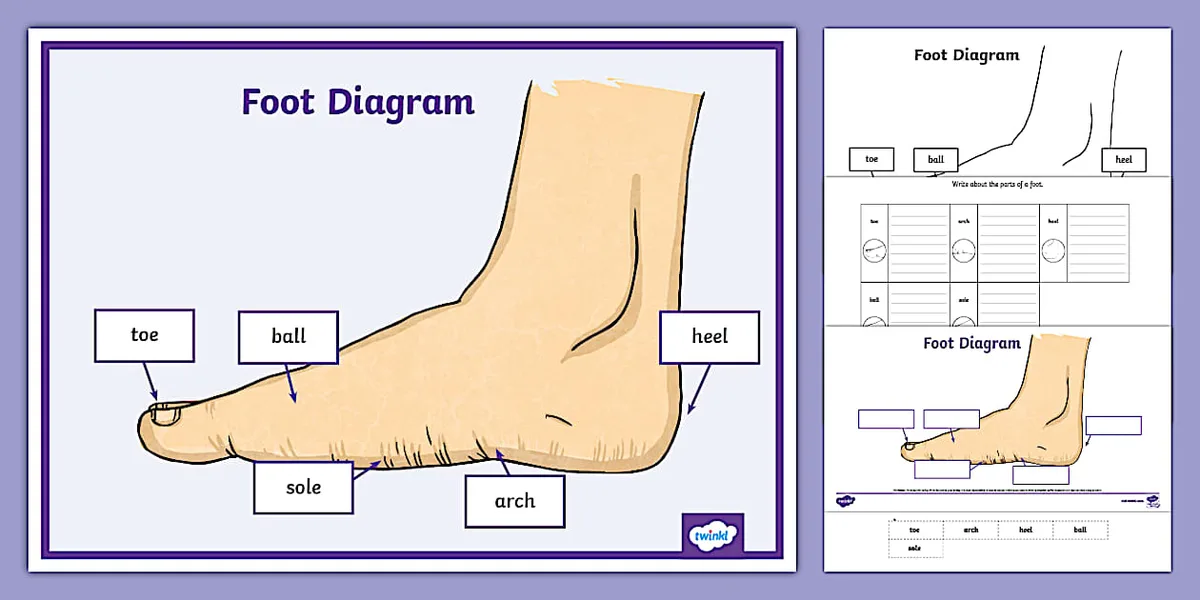
Image source: Bing (Web (fair-use with source credit))
Mark the Key Points
Once the tracing is complete, carefully step off the paper. Now, take your ruler and mark two essential points on the tracing:
- Length: Identify the absolute longest point of your foot's outline (typically your longest toe) and draw a straight line down to the edge of the paper. Then, mark the very back of your heel. The distance between these two points is your foot's length.
- Width: Find the widest part of your foot's outline, usually across the ball of your foot, just behind your toes. Draw a straight line across this widest area. The distance between these two points represents your foot's width.
Measure and Record
Use your ruler to measure the precise distance between the two length marks you made. Write this number down. Next, measure the distance between the two width marks and record that number as well.
It's vital to repeat this entire process for your other foot. Typically, one foot is slightly larger than the other, and you should always use the measurements from the larger foot when selecting shoes.
Understanding Your Foot Measurements
So, you've got your numbers, length and width, likely in inches or centimeters. That's fantastic! But what do these figures actually mean for your shoe size?
This is where you connect your physical measurements to the world of shoe sizing charts, which are available on most shoe manufacturer websites.
- Length: This measurement is your primary guide to finding your base shoe size. For instance, a foot length of 10.5 inches might correspond to a men's US size 9 or 10, depending on the brand.
- Width: This measurement is also critically important, especially if you have feet that are significantly narrower or wider than average. Many shoe companies offer shoes in various widths, such as narrow (N), medium (M or D), wide (W or E), and extra-wide (XW or EE). If your width measurement is noticeably different from what's typically paired with your length, you'll definitely want to consider these width options.
Comparing your recorded measurements against a specific brand's sizing guide is the most effective way to pinpoint your best fit. Always remember to use the measurements from your larger foot.
Extra Tips for a Perfect Shoe Fit
Beyond just taking your measurements, a few extra considerations can significantly boost your chances of finding that perfect shoe fit. These are practical insights gathered from experience and user feedback that go a little beyond the basic measuring steps.
- Measure Later in the Day: As mentioned, feet tend to swell as the day wears on, especially after standing or walking. Measuring in the afternoon or evening gives you a measurement that accounts for this natural expansion, preventing shoes that feel fine in the morning from becoming tight later on.
- Consider Your Sock Choice: The type of socks you plan to wear with your shoes can make a difference. If you're buying athletic shoes and typically wear thick, cushioned socks, wear those socks while you're measuring and tracing. This ensures the shoe will accommodate the sock's bulk.
- Don't Trace Too Loosely or Tightly: Aim for a trace that's snug to your foot's outline without being so tight that you're pulling the pencil away from your skin, and not so loose that you're tracing extra space. The goal is an accurate representation of your foot's shape.
These tips help ensure your measurements are as accurate as possible, providing a reliable foundation for selecting footwear that truly fits.
Mistakes to Avoid
Even with the right tools and a clear process, it's easy to make small errors that throw off your measurements. These common mistakes can lead to buying shoes that just don't feel right, so it’s good to be aware of them.
- Tracing while sitting or with feet hanging: If your foot isn't flat on the paper with weight distributed evenly, your tracing will be shorter than your actual foot size. This is because the arch might not be fully engaged. Manufacturer specifications for footwear often assume a standing, weight-bearing measurement for accuracy.
- Not measuring both feet: Most people have at least one foot that's slightly larger than the other. Relying on the smaller foot's measurements means the shoe might be too tight on the larger one, causing discomfort or even foot issues. Always use the data from the bigger foot.
- Tracing too loosely or too tightly: If you trace too far away from your foot, you're adding extra space. If you trace too close, pressing into your foot, you're making it seem smaller. The goal is to capture the foot's natural boundary without distortion.
Avoiding these common pitfalls ensures your measurements are as accurate as possible, giving you the best foundation for selecting footwear that truly fits.
Costs / Pricing / Data / Specs
While measuring your feet is a free activity, understanding the "cost" and "data" involved relates to what you might spend on shoes and the specifications you need to consider. The primary "data" you'll generate are your foot length and width, typically measured in inches or centimeters. These are the key specifications you'll then use.
The actual cost associated with proper foot measurement is zero, assuming you have paper, a pencil, and a ruler. The real "cost" comes into play when you purchase shoes. If you buy ill-fitting shoes because your measurements were off, you might face:
- Return fees or hassle: Many online retailers have strict return policies.
- Wasted money: Shoes that don't fit often end up in the back of a closet, a sunk cost.
- Potential for foot pain and injury: Poorly fitting shoes can lead to blisters, calluses, bunions, or even more serious biomechanical issues.
When looking at shoe specifications, pay attention to the sizing charts provided by manufacturers. These charts are your guide, translating your raw foot measurements into their specific sizing system. As of 2026, these charts are readily available online and are essential for making informed decisions.
Expert Tips / Pro Advice
When it comes to getting the most accurate foot measurement for shoe buying, a few pro tips can really make a difference. These are little tricks and insights that can refine the process beyond the basic steps.
- Trace your foot immediately after a long period of standing or walking: This captures your foot at its most swollen state, giving you the most generous measurement. This is especially useful if you're buying shoes for activities where your feet will be under prolonged stress.
- Consider the shoe's "last": The "last" is the foot-shaped mold that a shoe is built around. Different lasts have different shapes and volumes. Even with accurate measurements, understanding the last can help predict fit, though this is more advanced shoe-fitting knowledge.
- Don't forget to account for toe splay: When tracing, ensure your toes are spread naturally, not cramped. This helps capture the full width needed for comfort.
- Re-measure if you haven't bought new shoes in years: Our feet aren't static. A quick measurement can save you from buying shoes that no longer fit your current foot dimensions, a common issue reported in aggregate reviews.
Implementing these expert tips can provide a more nuanced and reliable basis for your shoe purchases, ensuring optimal comfort and performance.
Frequently Asked Questions About Foot Measurement
How long does it take to measure my feet?
The entire process, including tracing and measuring both feet, typically takes about 10-15 minutes. It's a quick task that pays off in better shoe fit.
Can I just use my old shoe size?
While your usual size might be a good starting point, it's not always accurate due to changes in foot size over time and variations in brand sizing. Accurate measurements provide a reliable baseline.
Do I need special equipment to measure my feet?
No, you don't. Standard household items like paper, a pencil, and a ruler or measuring tape are all you need for an accurate foot measurement.
Should I measure my feet every time I buy shoes?
It's a good habit to measure your feet periodically, especially if it's been a while or if you're trying a new brand. Your foot size can change over time.



One Comment